
Keynote Speakers
Prof. Zhongyuan Wang
Wuhan University
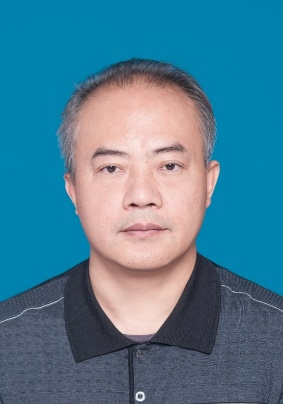
Title: Trusted Face Recognition and Forgery Detection
Abstract: Trusted face recognition is a critical supporting technology in social governance. Currently, facial identity information faces dual challenges: interference from uncontrolled environments and AI-generated forgeries. This report introduces several effective methods for masked face recognition from the perspectives of facial samples and recognition models. At the same time, in response to the threat posed by Deepfake to the verification of real identities, it further elaborates on the technical approaches and effectiveness of countering AI identity fraud in cyberspace, aiming to safeguard identity security.
Bio: Wang Zhongyuan, a professor at the School of Computer Science, Wuhan University, specializes in multimedia information processing and its applications in social security. He has led multiple national and provincial-level research projects, authored over 50 academic papers, with several being recognized as ESI Highly Cited Papers. Under his guidance, students have achieved top honors, including first place in the International TRECVID Competition, the Best Paper Award from the International Association for Biometrics, and the Nomination Award for Outstanding Doctoral Dissertation from the China Society of Image and Graphics. His research contributions have been honored with the Hubei Province First Prize for Technological Invention and the Guangdong Province First Prize for Scientific and Technological Progress.
Prof. Wenhua Qian
Yunnan University
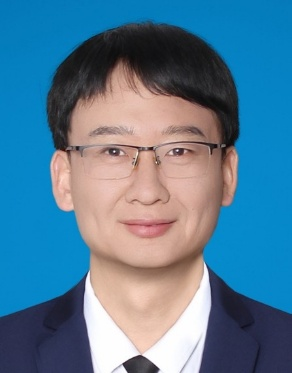
Title: Adaptive Infrared and Visible Light Image Fusion Method
Abstract: A single sensor is unable to meet the increasingly complex task requirements. A multi-sensor system can simultaneously acquire data of multiple features, effectively overcoming the functional limitations of a single sensor by fusing multimodal data to generate high-quality images that can reflect the physical characteristics of the target object while maintaining the spatial structure. The fusion results can better serve subsequent advanced visual tasks. This report introduces the cutting-edge technologies for infrared and visible light image fusion, improving the fusion effect through complementary modal perception.
Bio: Wenhua Qian, Doctor, Professor, Doctoral Supervisor, Postdoctoral Fellow at Southeast University, Vice Dean of the College of Undergraduate Studies. Industry Innovation Talent of the "Support Program for Developing Talents in Yunnan Province", Young Talented Person of the "Yunling Series of the Ten Thousand Talents Plan" in Yunnan Province, Leader of the "Visual and Cultural Computing Innovation Team" in Yunnan Province, Young Academician of Yunnan Province. Core member of the "Graphics and Image Processing" discipline in the information science field, core member of the "Graphics and Image" course group. Member of the Chinese Society for Computer Graphics and Image Processing, Senior Member of the Chinese Computer Society, Senior Member of the Graphics Society, Member of the National Digital Entertainment and Simulation Society, Member of the Chinese Computer Vision Professional Committee, Member of the Digital Cultural Heritage Professional Committee, Editor-in-Chief of "Chinese Journal of Computer Graphics", Member of the Education Committee of Yunnan Computer Society. He has authored or co-authored over 80 papers in refereed international journals. He has published 3 monographs.
Prof. Tao Lu
Wuhan Institute of Technology

Title: Human-Centric Embodied AI: From Pixel Enhancement and Dynamic Interactions to Deep Intention Parsing
Abstract: Embodied AI is expanding from industrial settings to human-centric real-world applications such as home care, elderly assistance, and healthcare. However, current embodied AI systems still face three critical bottlenecks in understanding humans: visual perception fails to recover clear facial identity and expression information under degraded conditions such as low light and long distance; fine-grained human-object interactions are difficult to parse from dynamic videos; and emotional triggers and deep causal logic are challenging to extract from natural language. To address these challenges, this report presents three independent technical explorations: (1) Duplex Fusing-Embedding Learning, which enables bidirectional collaboration between illumination recovery and structure reconstruction to restore reliable facial perception under extreme degradation, providing a robust visual foundation for embodied AI; (2) End-to-End Association Reasoning Network, which reformulates dynamic scene graph generation as a set prediction problem and achieves precise entity-predicate association reasoning through Predicate Association Parsing and Hierarchical Attention, attaining state-of-the-art performance on the Action Genome dataset; and (3) Double-Graph Relational Enhancement, which synergizes GAT and RGCN to model both semantic and logical dependencies, enabling accurate emotion-cause pair extraction from text and achieving top-tier emotion extraction performance on benchmark datasets. These three works follow a pathway from "seeing humans clearly" to "understanding human actions" to "reading human intentions," collectively serving the goal of enabling embodied AI to better understand humans. Finally, this report summarizes the three works and discusses future directions, including multimodal integration, proactive service prediction, and real-world deployment.
Bio: Dr. Tao Lu is a professor and doctoral supervisor at Wuhan Institute of Technology. He currently serves as the Director of the Hubei Key Laboratory of Intelligent Robot. He is a Distinguished Member of the China Computer Federation (CCF) and a Senior Member of the IEEE. His primary research interest lies in artificial intelligence. In recent years, he has led over 20 research projects. He has authored two academic monographs and published more than 80 research papers as the first or corresponding author, including six ESI highly cited papers. He holds 38 authorized patents. He has received the Best Paper Award at IFTC 2018 and the Best Student Paper Award at ICPR, a top-tier international conference on pattern recognition. He has also been honored with four provincial/ministerial and society-level science and technology achievement awards, as well as five teaching achievement awards.
Prof. Yuxin Huang
Kunming University of Science and Technology
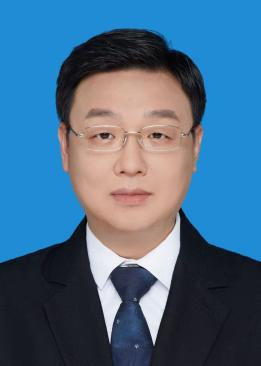
Title: Key Technologies and Applications of Speech and Language Information Processing for Low-Resource South and Southeast Asian Languages
Abstract:Under the Belt and Road Initiative, speech and language information processing for low-resource South and Southeast Asian languages has attracted increasing attention due to its broad application prospects. However, research in this area still faces significant challenges, including the scarcity of parallel data resources, complex linguistic characteristics, and difficulties in knowledge integration, resulting in suboptimal performance. This talk first introduces the key technologies for constructing speech, language, and knowledge resources for South and Southeast Asian languages. It then presents recent advances in foundation models, machine translation, automatic speech recognition and speech synthesis, image OCR, and multilingual event analysis for these languages. Finally, the talk showcases the development and practical applications of machine translation, speech recognition, and speech synthesis platforms and products for South and Southeast Asian languages in real-world scenarios.
Bio: Huang Yuxin, Doctor, Professor, Doctoral Supervisor, Vice Dean of the Kunma College, Kunming University of Science and Technology, Deputy Director of the Yunnan Key Laboratory of Artificial Intelligence, Deputy Director of the Engineering Research Center of the Ministry of Education for Language and Speech Information Processing of South and Southeast Asian Languages. He has long been engaged in research on machine translation for South and Southeast Asian languages, international communication content generation, and multilingual big data analysis. He was awarded the Special Prize of the Yunnan Provincial Science and Technology Progress Award, the Special Prize of the Wu Wenjun Artificial Intelligence Science and Technology Progress Award of the Chinese Association for Artificial Intelligence, and the First Prize of the Qian Weichang Chinese Information Processing Science and Technology Award. He has undertaken more than 10 national and provincial research projects, including projects funded by the National Natural Science Foundation of China, Major Science and Technology Projects of Yunnan Province, and Key Basic Research Projects of Yunnan Province. He has authored or co-authored over 40 papers in refereed international journals and conferences, and holds more than 20 national invention patents. The South and Southeast Asian Language Machine Translation Systemdeveloped by his research team, Yunling Translation, has been widely applied in government services, tourism, and public services.